


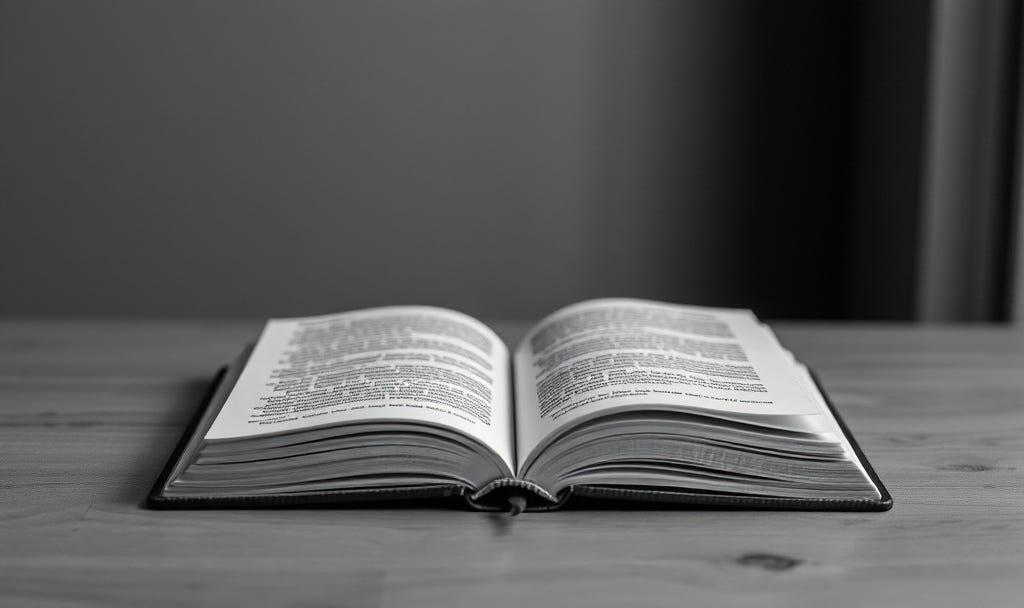
Books have been my most faithful companions.
They waited for me longer than any person ever has. Longer than lovers. Longer than friends. Longer than entire phases of my life. More patiently than a dog, they sat on shelves and nightstands, asking nothing, making no demands—only ready when I was.
I didn’t always treat them well.
As a child, fiction was my portal. I lived inside stories because my real life was small and lonely. Books offered escape, adventure, intimacy, whole worlds I could step into when I didn’t yet know how to step into my own. I loved the smell of them. The weight of them. The promise on their covers—each one a poster for a life that might exist somewhere else.
Then, sometime around my senior year of high school, the books went quiet.
I had a life to live now. Or so I thought. Relationships, identity, survival, responsibility—these things crowded out reading. I didn’t need books anymore. I was busy proving myself, hustling, adapting, enduring. Education replaced learning. Credentials replaced curiosity. Sitting still with a book felt indulgent, even childish.
So I pushed them aside.
Years passed. I still collected books—lined the walls with them, built a home library—but I rarely opened them. I told myself I wanted my life, not more stories of other people’s lives. When I needed escape, Netflix was faster. Easier. Twenty episodes in a row required nothing from me except my presence on the couch.
The books waited.
Eventually, life caught up with me. Not in a dramatic collapse, but in the slow, unmistakable way that comes with time. You realize you’re closer to the horizon than the beginning. You start asking quieter, sharper questions. What matters? What’s left? What am I actually becoming?
That’s when the books came back—but not the ones I’d known before.
This time, I didn’t reach for fiction. I reached for learning.
Not education. Not self-help in its shiny, performative form. Learning as curiosity. As exploration. As agency. Nonfiction didn’t entertain me—it engaged me. It asked me to think. To argue. To underline. To write back in the margins. It treated me like an adult capable of discernment, not a consumer of inspiration.
I wasn’t escaping anymore. I was training.
Writers became my mentors. Martha Beck reminded me it was safe to imagine a north star. Seth Godin gave me permission to let go of what wasn’t working. David Sedaris made me laugh when I’d forgotten how. Audiobooks walked beside me when my attention couldn’t yet sit still. They didn’t judge. They didn’t rush me. They met me where I was.
That’s when I understood something I’d missed my entire life:
Reading well isn’t passive. It’s participatory.
When I read now, I’m not trying to finish a book. I’m trying to engage with a mind. I stop when I need to. I move on when a book has given me what it can. I underline ideas that argue with me. I let go of books that no longer apply. The effort is the reward. The thinking is the point.
Books didn’t save me.
They taught me how to think again.
They showed me that learning doesn’t end with school—and that it doesn’t need permission. That curiosity is not a luxury of youth but a discipline available at any age. That growth isn’t about becoming someone new, but about reclaiming parts of yourself that were set aside to survive.
The books never left.
They were just waiting for me to be ready.
If there’s an invitation here, it’s a simple one:
Let a book find you.
Not the one you should read. The one that won’t leave you alone.
Open it. Argue with it. Learn from it.
And trust that the effort itself is already changing you.